
'So, we would work with our members to ensure that we as an SRO create some sort of due diligence for fintechs.'

Banks have issued Rs 7.78 trillion worth of CDs in the current calendar year until August 2024, compared to Rs 4.9 trillion in the same period of 2023, registering a 59 per cent growth

Allocation to bank deposits -- fixed deposits, savings account deposits, and current account deposits -- came down.

Balance-level delinquencies in the credit card segment saw a 17 basis points (bps) year-on-year (Y-o-Y) rise in the quarter ending June 2024 (Q1FY25). In all other credit segments, including personal loans, delinquencies declined even as retail credit growth moderated, consequent to banks tightening the supply of credit to the unsecured segments, a report by TransUnion CIBIL said on Monday. Data shows that balance-level delinquencies, measured in terms of 90 days or more past due, in the credit card segment stood at 1.8 per cent in Q1FY25- highest among all other credit segments.

A number of non-banking financial companies (NBFCs) have tapped into the debt capital market ahead of the festival season to meet increasing credit demand as bank funding slows. On Tuesday, Aptus Value Housing Finance secured Rs 300 crore at an interest rate of 8.75 per cent through bonds maturing in five years. ICICI Home Finance Company turned to the market to raise Rs 275 crore at 7.94 per cent, alongside another Rs 300 crore at 7.95 per cent, through bonds maturing in five and three years, respectively.

State-owned Life Insurance Corporation (LIC) announced on Monday that it had signed up tech giant Infosys to develop a next-generation digital platform that will act as the foundation for new high-value business applications, such as customer and sales super apps, portals, and digital branches. The financial terms of the deal remain undisclosed. The tie-up with Infosys is part of LIC's "long-drawn" strategy, said a senior executive of India's biggest insurer, who noted that the IT giant "won the bid to develop the next-generation platform through a request for proposal (RFP) process".
The liquidity will move into deficit after advance tax payments and GST outflows. It will rebound in October because of government spending.

Industry experts believe that health insurance companies are unlikely to experience business cannibalisation due to the central government's decision to extend health coverage to people aged 70 and above, regardless of their income level, under the Ayushman Bharat scheme. On Wednesday, the Union Cabinet expanded the Ayushman Bharat Pradhan Mantri Jan Arogya Yojana (AB-PMJAY) to include all senior citizens aged 70 and older. This move is expected to benefit nearly 45 million families, comprising 60 million senior citizens, by providing Rs 5 lakh in free health insurance coverage per family.

'Opportunity is there in each segment of the market. There is opportunity in affordable and specifically governed by government initiatives as well as for housing for all.'
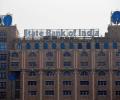
In order to boost its deposit base, State Bank of India (SBI) is focusing on various segments, including JanDhan account holders, trusts, societies, and the segment below the affluent class but above the normal account holders. According to Ashwini Tewari , managing director, SBI, the bank is focusing on three broad segments. One is wealth banking, where the bank is focusing on individuals who perhaps do not qualify for private banking but are above regular accounts and require individual attention.

Corporate bond issuances fell by around 22 per cent in August, despite easing yields as issuers delayed raising funds awaiting the US Federal Reserve to start cutting interest rates from this month. Corporates and financial institutions expect yields to fall further and borrowing costs to become cheaper, said market participants. The US Fed is widely expected to cut interest rates by 25 bps in the 17-18 September meeting, marking the start of a downward interest rate cycle.

'We do not believe in fire sale. We don't do it.'

'There has been a change in the advances mix, with the share of corporate loans decreasing.'

Households are likely to remain the primary net lenders to the economy in the coming decades.

The rupee has depreciated by 0.6 per cent so far in the current financial year.
The Reserve Bank of India (RBI) has recognised the Fintech Association for Consumer Empowerment (FACE) as a self-regulatory organisation (SRO) in the fintech sector, the central bank announced on Wednesday. The banking regulator received three applications for fintech SRO. Of the remaining two applications, one has been returned by the RBI with a provision for resubmission after meeting specific requirements, while the third application is still under examination, said Governor Shaktikanta Das at the Global Fintech Fest in Mumbai.

The Reserve Bank of India (RBI) will launch the Unified Lending Interface (ULI) nationwide in due course, aiming to transform India's lending sector, similar to how the Unified Payments Interface (UPI) revolutionised the payments ecosystem, Governor Shaktikanta Das said on Monday.

Overseas Indians deposited around $4 billion in non-resident Indian (NRI) deposit schemes in April - June FY25, up 79 per cent over the amount deposited in these schemes in the same period last year, data released by the Reserve Bank of India (RBI) on Monday showed. In April - June FY25, inflows into the NRI schemes stood at $3.95 billion, compared to $2.21 billion during the same period a year ago. With this, the total outstanding NRI deposits as of June stood at $155.71 billion.

Private banks' net profit grew 26.3 per cent year-on-year (Y-o-Y) to Rs 48,982 crore in the first quarter ended June 2024 (Q1FY25) owing to healthy growth in credit and other income. The gross non-performing assets (GNPAs) increased with the end of dispensation granted during the pandemic, according to the data compiled by BS Research Bureau for listed 18 private banks.

The Reserve Bank of India (RBI) on Wednesday issued a draft framework for alternative authentication mechanism for digital payments, wherein it has mandated that all digital payment transactions would have to be authenticated with an additional factor of authentication (AFA), except small value contactless card payments for up to Rs 5,000 at point of sale terminals, e-mandates for recurring transactions, and small value digital payments through offline mode, among others. Additionally, it has said that all digital payment transactions, other than card present transactions, have to ensure that one of the factors of authentication is dynamically created, i.e., the factor is generated after initiation of payment; is specific to the transaction; and cannot be reused.
 © 2026 Rediff.com - Investor Information - Advertise with us - Disclaimer - Privacy Policy - Sitemap - Feedback - About us - Terms of use - Grievances